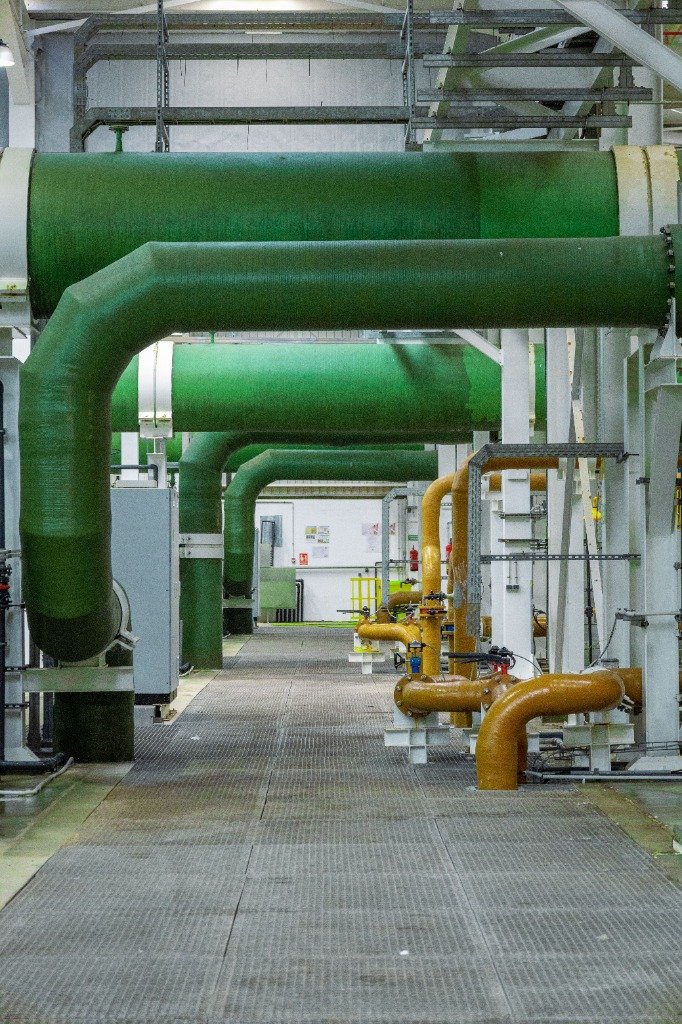
In an industrial facility, piping does much more than connect one piece of equipment to another. It transports the liquids, gases, steam and other substances that keep production processes running.
From chemical manufacturing and pharmaceutical production to food processing and heavy industry, industrial process piping systems play an important role in plant operations. Their design, material selection, fabrication and installation can directly affect safety, product quality, equipment performance and maintenance requirements.
However, not all industrial piping systems are the same. The right solution depends on what the piping carries, the conditions under which it operates and the requirements of the process.
Whether you are planning a new industrial facility or upgrading an existing plant, understanding how process piping works can help you make better engineering and project decisions.
In this guide, we explain the main types of industrial process piping, commonly used materials, essential components, installation considerations and factors to evaluate when selecting a piping contractor.
What Is an Industrial Process Piping System?
An industrial process piping system is a network of pipes, fittings, valves and associated components used to transport fluids or gases within an industrial process.
These systems connect equipment such as pumps, tanks, reactors, heat exchangers and production machinery. Depending on the application, they may transport raw materials, intermediate products, finished products or substances required to support manufacturing.
For example, a chemical processing plant may use process piping to transfer liquids between storage tanks and reaction vessels. A pharmaceutical facility may require carefully specified stainless steel piping for particular process applications. A manufacturing plant may also use separate utility piping networks for steam, compressed air or cooling water.
The design of each system depends on its intended purpose, operating conditions, material compatibility and applicable engineering requirements.
<The key distinction is that process piping must be suitable for the substance being transported and the conditions in which the system operates. A solution that works for one application may not be appropriate for another.
What Are the Different Types of Industrial Piping Systems?
Industrial facilities use several types of piping, each designed to serve a particular function.
1. Process Piping
Process piping transports materials directly involved in manufacturing or production.
<Common applications include chemical processing, pharmaceutical manufacturing, food processing, oil and gas facilities, and other industrial operations.
<The system requirements depend on the properties of the transported substance, including its temperature, pressure, corrosiveness and compatibility with the selected piping material.
<Process piping may require detailed specifications for pipe dimensions, fittings, valves, welding procedures, inspection and testing.
2. Steam Piping
<Steam piping carries steam used for heating, processing or other industrial applications.
<It must be designed with appropriate consideration for operating pressure, temperature, thermal expansion, insulation, drainage and condensate management.
<Pipe supports and expansion arrangements are also important because steam systems can experience significant temperature changes during operation.
<The applicable design requirements depend on the system's operating conditions and the relevant codes and standards.
3. Cooling Water Piping
<Cooling water piping circulates water through equipment and processes that require heat removal.
<It is commonly associated with heat exchangers, industrial machinery, cooling systems and manufacturing processes.
<When planning a cooling water network, engineers need to consider flow requirements, pressure losses, material compatibility, water quality and the potential for corrosion or scaling.
<The correct design helps the system deliver the required cooling performance while supporting reliable operation.
4. Compressed Air Piping
<Compressed air is used in many industrial facilities to operate pneumatic equipment, tools, actuators and other machinery.
<A compressed air distribution system needs to deliver air at the required pressure and flow rate while accounting for pressure losses, leakage, moisture and air quality requirements.
<The choice of piping material depends on the application, operating conditions, system specifications and applicable requirements.
<Poorly planned distribution networks can lead to pressure drops, energy waste and inconsistent equipment performance.
5. Chemical and Corrosive Fluid Piping
<Chemical processing facilities may need piping systems that transport corrosive, reactive or otherwise hazardous substances.
<Material selection is especially important in these applications. Engineers must evaluate the chemical properties of the fluid, concentration, operating temperature, pressure and compatibility with pipes, valves, seals and other wetted components.
<Depending on the application, suitable materials may include particular grades of stainless steel, alloy materials or non-metallic piping systems.
<Material selection should be based on engineering assessment rather than on the assumption that one material is suitable for every chemical application.
6. Utility Piping
<Utility piping supports the operation of industrial facilities rather than directly carrying the main product.
<Depending on the plant, utility networks may carry nitrogen, vacuum, thermal oil, cooling water, compressed air or other services.
<These systems are essential to production, but their requirements can vary significantly. For example, a nitrogen line may have different material and cleanliness requirements from a cooling water line.
<Clearly identifying each utility, its operating conditions and its connection points helps avoid confusion during fabrication and installation.
Which Materials Are Used in Industrial Process Piping?
<Choosing the right piping material is one of the most important decisions in a process piping project.
<The material must be suitable for the transported fluid, operating conditions, expected service life and applicable technical specifications.
<Common options include the following.
Stainless Steel Pipes
<Stainless steel is widely used in industrial applications where corrosion resistance, durability or specific cleanliness requirements are important.
<Different grades offer different properties. For example, stainless steel grades such as 304 and 316L are used in various industrial applications, but their suitability depends on the service conditions.
<Grade 316L may be considered for applications requiring improved resistance to certain forms of corrosion, but it is not universally suitable for all chemicals or environments.
<In pharmaceutical, food processing and other specialised applications, additional requirements may apply to surface finish, cleaning, fabrication and documentation.
Carbon Steel Pipes
<Carbon steel piping is used in many industrial systems, including certain utility networks, steam applications and process services.
<It can be a practical choice where its mechanical properties, temperature and pressure capabilities, corrosion behaviour and cost align with the project's requirements.
<However, corrosion protection, fluid compatibility and operating conditions must be evaluated before specifying the material.
Alloy Steel Pipes
<Alloy steel piping may be selected for particular high-temperature, high-pressure or other demanding service conditions.
<The appropriate grade depends on the engineering design and the properties required for the application.
<Because material requirements can differ considerably between projects, specifications should identify the correct grade and relevant manufacturing and inspection requirements.
Non-Metallic Piping Materials
<Certain industrial applications use non-metallic piping materials, including specific plastic or composite systems.
<These may be appropriate where chemical resistance, weight or other application-specific characteristics are important.
<Their suitability depends on pressure, temperature, chemical compatibility, mechanical loading and the relevant installation requirements.
<There is no single best piping material for every industrial project. The correct selection must be based on the service conditions and the project's engineering specifications.
What Are the Main Components of a Process Piping System?
<A process piping system includes more than straight lengths of pipe. Several components work together to control flow, connect equipment and support safe operation.
Pipes
<Pipes form the main pathway through which fluids or gases travel. Their material, diameter, wall thickness and manufacturing specifications depend on the system requirements.
Fittings
<Fittings connect sections of piping and allow changes in direction, branching or transitions between different pipe sizes.
<Common examples include elbows, tees, reducers and caps.
Valves
<Valves regulate, isolate or control the flow of fluids through the system.
<Depending on the application, a piping network may use gate valves, globe valves, ball valves, butterfly valves, check valves or specialised control valves.
<The valve type must suit the intended service and operating conditions.
Flanges and Connections
<Flanges and other connection methods join piping sections to each other or to equipment.
<The connection type depends on the design, pressure requirements, material and maintenance considerations.
Pipe Supports
<Pipe supports help carry the weight of the piping system and its contents while managing loads caused by temperature changes, vibration and connected equipment.
<Incorrect support placement can contribute to excessive stress, movement or damage to connected components.
Instrumentation
<Depending on the process, piping systems may incorporate instruments such as pressure gauges, temperature sensors, flow meters and other monitoring devices.
<These instruments help operators monitor process conditions and support process control.
<The exact instrumentation requirements depend on the process design and operating needs.
What Is ASME B31.3, and Why Does It Matter for Process Piping?
<ASME B31.3 is a widely recognised piping code covering process piping in applications such as chemical plants, petroleum refineries, pharmaceutical facilities and other industrial process environments.
<It addresses important aspects of piping design, materials, fabrication, assembly, examination, inspection and testing within its scope.
<For projects where ASME B31.3 applies, the project team needs to determine the relevant code requirements and incorporate them into the engineering specifications and execution plan.
<However, not every industrial piping system automatically falls under ASME B31.3. Other systems may be governed by different codes, standards, regulations or client specifications.
<The appropriate requirements depend on the facility, service, jurisdiction and project scope. The applicable edition and any additional local or client requirements should be confirmed during project planning.
<For this reason, it is important to establish the governing codes and standards before fabrication and installation begin.
How Is Industrial Process Piping Fabricated and Installed?
<Process piping projects typically involve several stages. The exact workflow varies according to the project size, piping design, site conditions and contract scope.
Step 1: Review the Engineering Requirements
<The project team reviews the approved drawings, piping specifications, equipment connections, material requirements and applicable codes.
<This stage helps identify the information required before procurement and fabrication.
Step 2: Material Selection and Procurement
<Pipes, fittings, flanges, valves and other components are selected according to the approved specifications.
<Material identification and traceability requirements should be established where applicable. This helps the project team verify that the supplied materials correspond to the required specifications.
Step 3: Pipe Fabrication
<Fabrication may involve cutting, bevel preparation, fit-up, welding and the preparation of piping assemblies according to approved drawings and procedures.
<Depending on the project, some fabrication may take place in a workshop before the assemblies are transported to the site.
<Accurate measurements and controlled fabrication help reduce dimensional issues during installation.
Step 4: Welding and Inspection
<Welding requirements depend on the piping material, joint design, service conditions and governing specifications.
<The project may require approved welding procedures, qualified personnel and inspection activities appropriate to the application.
<Non-destructive examination, such as radiographic or ultrasonic testing, may be specified for particular welds or services. The extent and method of examination should follow the applicable code and project requirements rather than being assumed to be identical for every installation.
Step 5: On-Site Installation
<The fabricated piping is installed according to the approved layout and project sequence.
<Activities may include positioning, alignment, connection to equipment, installation of supports and coordination with other mechanical, structural and electrical work.
<Installation in an operating plant may require additional planning to manage access restrictions, shutdown windows and interaction with existing systems.
Step 6: Testing and Final Checks
<Before a piping system is placed into service, the required inspections and tests must be completed.
<Depending on the system and applicable requirements, this may include pressure testing, leak checks, verification of connections and review of inspection records.
<The test method, acceptance criteria and documentation must be established for the specific project. Not every system uses the same test procedure.
Step 7: Handover and Documentation
<Once the required work and checks are complete, the contractor provides the agreed handover documents.
<Depending on the contract, these may include inspection reports, material records, test certificates, as-built drawings and other quality documentation.
<A clear handover process helps the owner understand what was installed and what records are available for future operation and maintenance.
What Are the Common Challenges in Industrial Piping Projects?
<Even a well-defined piping package can face challenges if engineering, procurement and installation are not coordinated effectively.
Incorrect Material Selection
<A material that is unsuitable for the transported substance or operating conditions can contribute to corrosion, degradation or premature failure.
<Material selection should therefore be based on the process requirements and approved specifications.
Poor Coordination Between Disciplines
<Piping systems often share space with steel structures, equipment, cable trays, ducts and other services.
<If these interfaces are not coordinated early, the result can be installation clashes, rework and schedule delays.
Inadequate Support and Expansion Planning
<Piping systems can experience loads from their own weight, fluid contents, vibration and thermal expansion.
<Supports and flexibility arrangements must be designed appropriately for the specific system.
Incomplete Inspection Records
<Missing material records, welding documentation or test reports can create difficulties during inspection, handover and future maintenance.
<Documentation requirements should be established before execution begins and maintained throughout the project.
Unclear Project Scope
<Unclear responsibilities can lead to disputes about who supplies materials, provides equipment connections, performs inspections or arranges testing.
<A detailed scope of work helps clarify responsibilities and identify exclusions before the project starts.
How to Choose the Right Industrial Process Piping Contractor
<Choosing a process piping contractor requires an understanding of the work involved and the capabilities needed to complete it.
<Before making a decision, consider these factors.
- Relevant project experience: Ask whether the contractor has experience with similar piping systems, materials and operating conditions.
- Fabrication and installation capabilities: Confirm which activities the contractor can execute and whether specialist processes or subcontractors are required.
- Quality procedures: Understand how materials, fabrication, welding, inspection and testing will be controlled and documented.
- Safety management: Ask how site hazards, work permits, lifting activities and other relevant risks will be managed.
- Project coordination: Review how the contractor will coordinate with equipment suppliers, other contractors and the client's engineering team.
- Testing and handover: Clarify which inspections, tests and documentation are included in the proposed scope.
- Applicable standards: Confirm that the contractor understands the codes, specifications and regulatory requirements relevant to the project.
A detailed quotation should clearly describe the work included, the assumptions made, the exclusions and the client's responsibilities.
Can Process Piping Contractors Support International Industrial Projects?
<Industrial process piping projects outside India may involve additional technical and logistical considerations.
<The project may require compliance with particular engineering codes, local regulations, client specifications, material approval procedures and inspection requirements. Procurement, shipping, customs, site access and coordination with local teams may also affect the execution plan.
<For international projects, it is important to establish the governing codes, required documentation, inspection arrangements and division of responsibilities before work begins.
<Companies should also be transparent about their geographical coverage and previous international project experience. A contractor's willingness to consider overseas work should not be confused with a verified record of completed international projects.
<For buyers evaluating an international piping contractor, the priority should be to confirm that the proposed team can meet the project's technical requirements and deliver the agreed scope.
Industrial Process Piping Services at Engineers Associate
<Engineers Associate is an industrial engineering and MEP contracting company based in New Delhi, India.
<Its areas of work include industrial process piping, structural steel fabrication, mechanical services, industrial HVAC, fire protection and related engineering installations.
<For process piping projects, defining the scope is an important starting point. Requirements such as the piping material, operating conditions, approved drawings, inspection procedures, installation environment and handover documentation should be understood before execution begins.
<Engineers Associate is also interested in evaluating suitable opportunities beyond India, with international project requirements and execution arrangements assessed individually.
<If you are planning a new industrial facility, upgrading an existing plant or evaluating a process piping package, contact Engineers Associate to discuss your requirements and determine whether the proposed scope aligns with its capabilities.
Frequently Asked Questions About Industrial Process Piping
1. What is industrial process piping used for?
<Industrial process piping transports liquids, gases, steam and other substances used in manufacturing or processing operations. It connects equipment and supports the movement of materials throughout an industrial process.
2. Which materials are commonly used in process piping?
<Common materials include stainless steel, carbon steel, alloy steel and certain non-metallic materials. The appropriate choice depends on fluid compatibility, operating pressure and temperature, corrosion considerations and the project's engineering specifications.
3. What is the difference between process piping and utility piping?
<Process piping generally carries substances directly involved in production, while utility piping supplies supporting services such as steam, cooling water, compressed air or nitrogen. The distinction depends on the function of the system within the facility.
4. What is ASME B31.3 used for?
<ASME B31.3 is a process piping code that covers requirements for areas including design, materials, fabrication, assembly, examination, inspection and testing within its scope. The project team must confirm whether it applies to the particular piping system.
5. Why is welding quality important in process piping?
<Weld quality can affect the strength, integrity and reliability of a piping system. Appropriate welding procedures, qualified personnel and inspection methods help verify that the work meets the applicable requirements.
6. What inspections and tests are required for process piping?
<Requirements vary by system, service, code and project specification. They may include visual inspection, specified non-destructive examination, pressure testing and leak checks. The inspection and testing plan should be defined before execution.
7. How long does an industrial process piping project take?
<The timeline depends on the quantity of piping, system complexity, material availability, fabrication requirements, site conditions and testing scope. A realistic schedule should be developed using the project drawings, quantities, procurement plan and installation sequence.
8. What should I check before hiring a process piping contractor?
<Review the contractor's relevant experience, fabrication and installation capabilities, quality procedures, safety practices, inspection and testing arrangements, documentation practices and ability to meet the agreed project schedule.
Conclusion
<Industrial process piping is a critical part of many manufacturing and processing facilities. Its performance depends on the right combination of material selection, engineering, fabrication, installation, inspection and testing.
<Understanding these elements helps project owners ask better questions, define their requirements more clearly and evaluate contractors on more than price alone.
<Before beginning a piping project, make sure the technical scope, applicable standards, responsibilities, inspection requirements and handover documents are clearly defined.
<With careful planning and effective coordination, industrial process piping work can be carried out in a more organised and predictable way, supporting the needs of the wider facility.
<Planning an industrial process piping project? Contact Engineers Associate to discuss your requirements and explore the engineering support that may be suitable for your facility.
Have a Process Piping Project?
Let's Discuss Your Engineering Requirements.
Share your project scope, piping requirements or facility plans with our team.